- product -
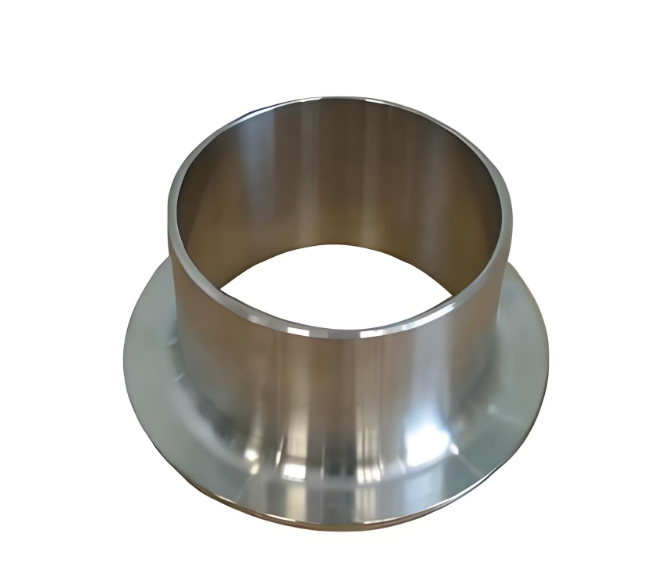
Introduction:The flanging process is a material processing method that uses a mold to punch the edge or outer edge of a sheet metal hole into a vertical edge. It is mainly used to manufacture three-dimensional parts with spatial shape and good rigidity, ……
The flanging process is a material processing method that uses a mold to punch the edge or outer edge of a sheet metal hole into a vertical edge. It is mainly used to manufacture three-dimensional parts with spatial shape and good rigidity, and can form assembly parts such as rivet holes and threaded bottom holes on the stamped parts, while improving the material flow performance during stamping of large parts. This process is widely used in the fields of automotive, aerospace, and home appliance manufacturing, and its forming process is prone to defects such as cracking, wrinkling, and rebound.
According to processing characteristics, it can be divided into two types: inner hole flanging and outer edge flanging. The inner hole flange is mainly subjected to tangential stretching, and the failure mode is often edge tearing; The outer edge flanging includes two types: concave and convex, which have problems of tangential tensile cracking and compressive wrinkling, respectively. In terms of process optimization, the design of composite mold structure can combine processes to improve efficiency. For example, the qualification rate of a certain household appliance part can be increased to 98% after adopting a single process composite mold. Numerical simulation techniques such as DYNAFORM and ABAQUS can predict defects and guide parameter optimization. The use of a dynamic hardening model in high-strength steel flanging can improve the accuracy of rebound prediction.

Top

 Contact
0917-3276678
 Scan
Scan







 location: